We built Plexo because websites shouldn't be this hard
Starting a business is hard enough. Your website shouldn't be.
We've all seen it all. A first-time business owner sits down to build their site, opens a popular website builder, and within twenty minutes they're staring at a pricing toggle, a list of 47 features they don't recognise, and a template that looked great in the screenshot but somehow looks nothing like it in real life.
They publish something. It works, technically. But it doesn't feel right, and they're not sure why, and they have nobody to ask. That gap between "I need a website" and "I have a website I'm proud of", is exactly what Plexo is built to close.
What Plexo actually is
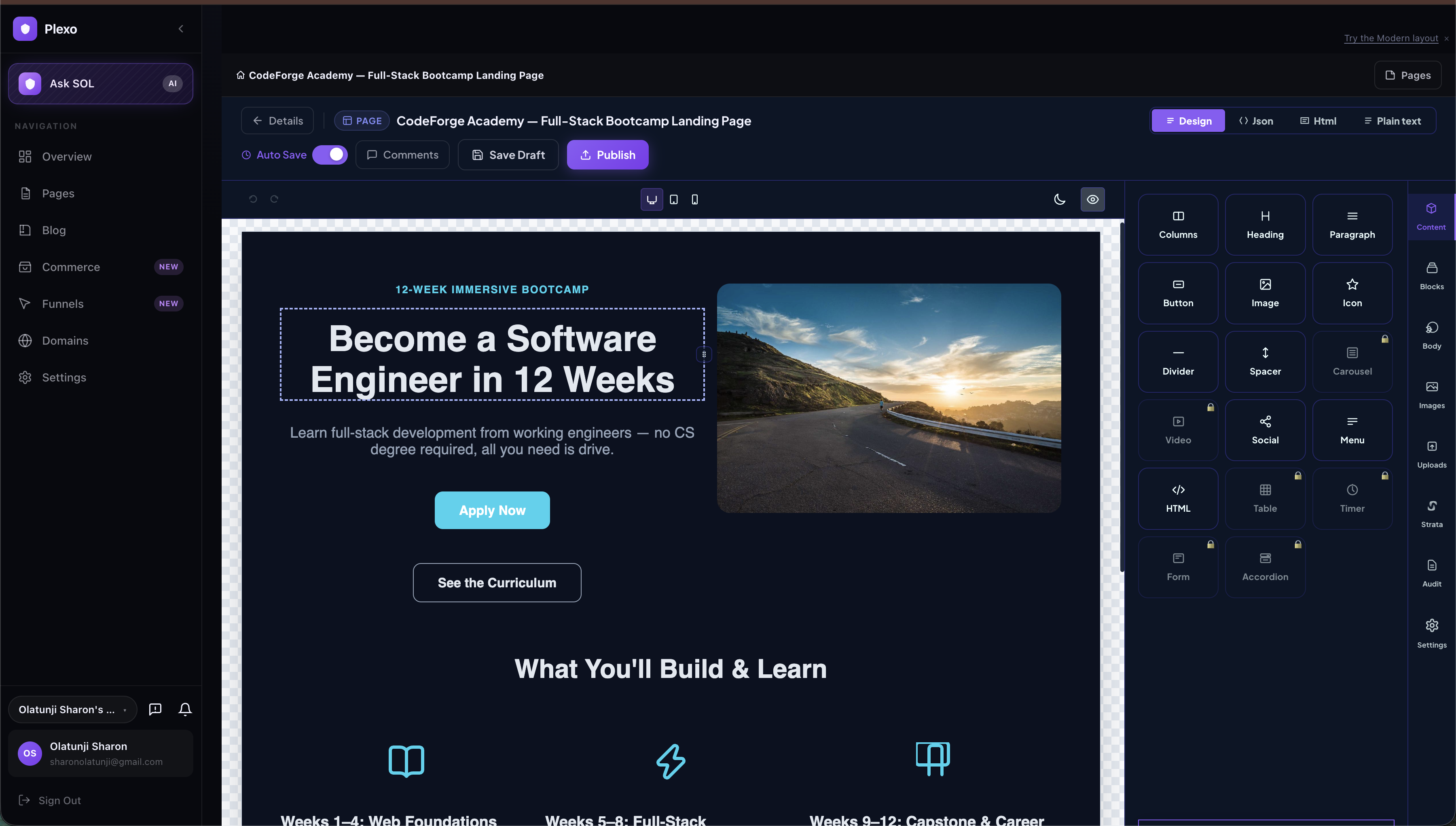
Plexo is a website builder. But the part we care about isn't the builder itself — it's what happens the moment you're done building.
Most builders stop at "published." Plexo doesn't. The moment you enable a feature — say, an online store — you get a working storefront, a checkout flow, and an order confirmation page. Ready. Not a prompt to go build those things yourself.
We call this the "out of the box" standard: every feature should work completely before you've made a single configuration decision. You should be able to visit your site after publishing and have it actually work the way a visitor would expect.
Simple as that sounds, most builders don't do it. They hand you the pieces and leave the assembly to you.
Why we built it this way
We've been building software for small businesses for a while, and the thing we kept hearing was a version of the same frustration: "I set it up and it seemed fine, but then a customer tried to use it and it didn't work."
Broken checkout pages. "Visit storefront" buttons that pointed nowhere. Contact forms that sent emails to the wrong address.
These aren't bugs in the traditional sense, they're gaps. Places where the builder handed off responsibility to the owner, and the owner had no idea that's what had happened.
Our answer to that is: don't hand it off in the first place. Set sensible defaults. Make everything work before the owner has to touch it. And when they do want to customise something, make sure the path to doing that is obvious.
What's coming
We're just getting started.
Over the coming weeks we'll be publishing guides, product updates, and honest reflections on what we're building and why. If you're a business owner trying to get a website up without hiring an agency, this blog is for you. If you're a developer curious about how we've built Plexo, you'll find someof that here too.
And if you want to try Plexo, go ahead! It's free to start, and you'll have a real, working site in the time it takes to have a cup of coffee.
We're glad you're here.
The Plexo team